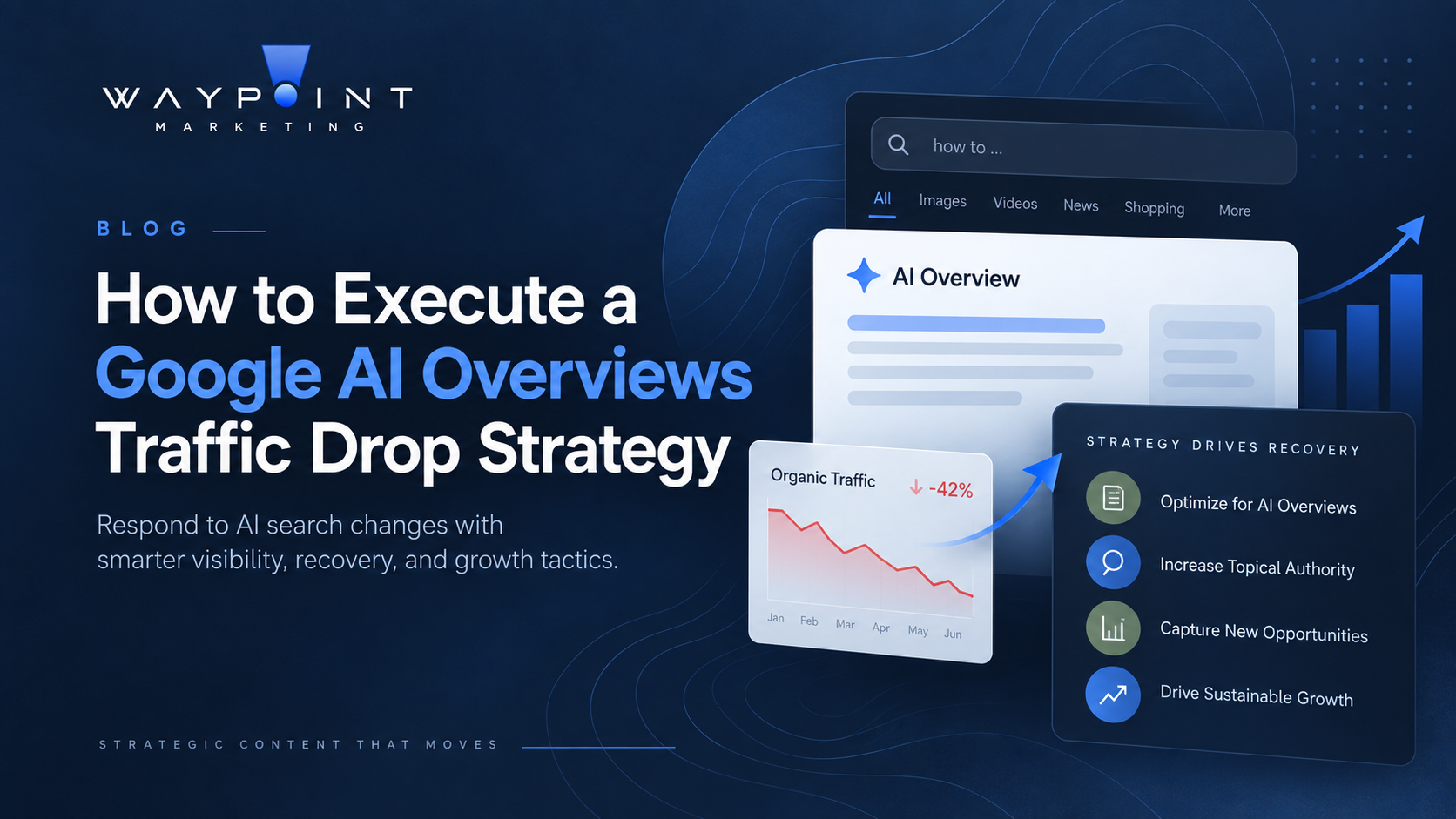
If your website analytics recently showed a steep drop in organic traffic despite no algorithm penalty on your account, you are seeing the direct effect of search engine evolution. Google AI Overviews now answer user queries right at the top of the search engine results page, keeping searchers on Google instead of sending them to your website. Losing top-of-funnel visitors is frustrating, but panicking will not restore your pipeline. To protect your revenue, you need a pragmatic google ai overviews traffic drop strategy—one that shifts your focus away from chasing low-intent clicks and toward building sustainable, high-converting revenue streams.
Assessing the Zero-Click Search Business Impact
For years, content marketing operated on a simple exchange: write clear answers to common industry questions, rank high on Google, and convert a percentage of that incoming traffic into leads. Generative AI changed that equation overnight. When an AI Overview summarizes your hard-earned insights directly on the search page, users get their answer without ever visiting your site.
This shift represents a significant zero click search business impact, particularly for companies that built their organic audience around broad, informational content. Definition queries, basic "how-to" guides, and general industry explanations are increasingly answered in line. However, a drop in overall session volume does not automatically mean a drop in qualified sales prospects. The visitors you lose to an AI summary were often the least likely to buy. The challenge now is identifying which traffic loss hurts your bottom line and which is simply unengaged traffic you no longer need to host.
Developing a Google AI Overviews Traffic Drop Strategy
To fix declining organic website traffic in an AI-first environment, you must audit your content performatively rather than reactively. A solid recovery plan starts with separating vanity metrics from conversion engines.
First, review your analytics to isolate which pages lost traffic. If your high-volume, top-of-funnel blog posts dropped 40% in pageviews but your demo requests and contact form submissions remained stable, your core business is intact. You simply lost informational skimmers. If, however, mid-funnel comparison pages or commercial-intent keywords lost visibility, your pipeline is directly at risk.
Second, reallocate resources away from basic definition content. Instead, invest heavily in expert-driven analysis, proprietary research, and unique case studies that AI engines cannot easily synthesize without citing you. Paired with targeted modern search optimization, this focus ensures that when searchers need a complex, customized solution, your brand is the clear choice.
Generative Engine Optimization for Business
Winning visibility in the era of AI requires an evolved approach to content structure. Generative engine optimization for business is not about tricking an algorithm; it is about making your content so authoritative and clear that AI models rely on your brand as a primary source.
Large language models prefer structured, verifiable facts over generic copy. To ensure your brand remains visible within AI-generated summaries and traditional search results alike:
- Publish original data: Conduct survey research, share industry benchmarks, and publish unique data points that AI systems must attribute to your site.
- Use clear entity structures: Implement clean header hierarchy, direct answer formatting, and schema markup so search crawlers easily index your core points.
- Demonstrate true subject-matter expertise: Include first-hand experiences, quotes from internal specialists, and detailed real-world examples that generic AI text cannot replicate.
When you elevate your content and creative strategy, you turn your site into a primary research destination rather than an information aggregator.
Diversifying Beyond Search with B2B Traffic Solutions
Relying exclusively on organic search traffic has always carried platform risk. The rise of AI Overviews simply accelerated the deadline for diversification. If you are seeking effective b2b search traffic decline solutions, the answer lies in building owned channels and capturing intent across multiple touchpoints.
When organic search becomes less predictable, your owned and paid channels must work harder. Retain visitors by converting organic readers into direct subscribers using high-value resources. Nurture those contacts through tailored email and lifecycle marketing campaigns that bypass third-party algorithms entirely. Simultaneously, targeted paid search campaigns allow you to claim top positioning for high-intent transactional keywords where an AI Overview cannot replace your actual offering.
Executing a Modern Search Strategy for Business Growth
Search is not dead, but the old playbook is obsolete. A modern search strategy for business shifts the primary KPI from total web sessions to qualified brand interactions.
This approach accepts that top-of-funnel volume may remain lower than it was three years ago. In response, it focuses on capturing commercial intent, building strong brand recall, and optimizing every stage of the user journey once someone lands on your site. When prospects look for specific solutions, deep category expertise, or trusted service providers, they scroll past the AI summary to find an established partner. That is where your brand must win.
A drop in organic traffic caused by Google AI Overviews is not an operational dead end—it is a signal to modernize your growth strategy. By focusing on deep subject-matter expertise, expanding your owned audience, and aligning your digital marketing around real business outcomes rather than raw traffic metrics, you build a resilient pipeline that no search algorithm update can disrupt.